Thursday, 16 June 2011

Mammals Of Pakistan Part 2
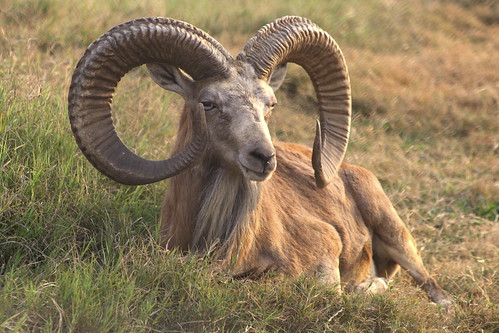

Markhor
( Capra Falconeri )
Local name: Markhor (Urdu)
4 Subspecies:
Flared horned Markhor:
· C. f. cashmirensis (Pir Panjal or Kashmir markhor),
· C. f. falconeri (Astor markhor)
Straight horned Markhor:
· C. f. jerdoni (Suleiman or straight-horned markhor)
· C. f. megaceros (Kabul or Kabal markhor)
Description and Biology:
Size:
Body Length: 132-186 cm / 4.4-6.2 ft.
Shoulder Height: 65-115 cm / 2.1-3.8 ft.
Tail Length: 8-20 cm / 3.2-8 in.
Weight: 32-110 kg / 70-242 lb.
Description: The most distinctively-horned member of the genus Capra, the markhor was officially described in 1839 by Wagner. In Pakistan 4 distinct subspecies are found. These are the Kashmir Markhor (C. f. cashmirensis) , Astor Markhor (C. f. falconeri ), The Kabul Markhor ( C. f. megaceros) and The Suleiman Markhor (C. f. jerdoni ). These are differentiated mainly by the shape of their horns. The Kashmir and Astor Markhor have flared spiral horns, while the Suleiman and Kabul Markhor have straight spiral horns. The grizzled light brown to black coat is smooth and short in summer, growing longer and thicker in winter. Males have long hair on the chin, throat, chest, and shanks, while females have smaller fringes. The lower legs have a black and white pattern. The tightly curled, corkscrew-like horns are present in both sexes,starting close together at the head, but spreading towards the tips. In males, they can grow up to 160 cm /64 inches long, and up to 25 cm / 10 inches in females.
Reproduction: Gestation Period: 135-170 days. Young per Birth: 1 or 2, rarely 3. Mating occurs during winter, with the subsequent births occuring from late April to early June. Sexual Maturity: At 18-30 months.
Social Behavior: The markhor is mainly active in the early morning and late afternoon. During the spring and summer months it is a grazer, while in the winter it turns to browse for nourishment. Markhor often stand on their hind legs in order to reach high vegetation. Population densities in Pakistan range from 1-9 animals per square kilometer. During the rut males fight for breeding rights. These competitions involve lunging and locking the horns, followed by the combatants twisting and pushing in an attempt to make the other lose his balance. The markhor's alarm call resembles the nasal "a" populalarized by the common domestic goat. Females and young live in herds of around 9 animals, adult males are usually solitary.
Diet: Grasses, leaves. The name markhor is derived from the Persian mar, a snake, and khor, eating. This is a very peculiar name, as they are vegetarians, though they have been known to kill snakes. (all above information from "The Ultimate Ungulate Page" by Brent Huffman, WWF/WCMC and "Mammals of Pakistan," T.J Roberts).
Habitat and Distribution:
The Markhor mainly inhabits the sparsely wooded mountainous regions in Northern and Western Pakistan, at an elevation of 600-3,600 m / 1,900-11,500 ft. The total world population is mainly found in Pakistan. Today, Markhor are present in around 20 of Pakistan's protected areas. In the northern mountanious regions is found the Kashmir and Astor Markhor. The Kashmir Markhor (C. f. cashmirensis ) is mainly confined to Chitral Gol National Park and presents the biggest population in Pakistan. Poaching has been successfully controlled and now there are over 500 Markhor in Chitral Gol National Park. The Kashmir Markhor is also found in areas of Gilgit and Azad Kashmir. The Astor Markhor (C. f. falconeri) is mainly confined to the higher hill ranges of Gilgit, Hunza and Nanga Parbat. The only good population is in the Kargah Nullah and Naltar, near Gilgit. The Kargah Nullah might have a total population of 50 Markhors. Current population estimates are less than 2,500 to 3,000 for the flared horned markhor in Pakistan (Hess et al. 1997).
Further south in the higher hill ranges of N.W.F.P and Baluchistan are found the Kabul and Sulaiman Markhor. Both these subspecies have straight spiral horns. The Kabul Markhor is critically endangered and is mainly confined to some hills around Peshawar and the border with Afghanistan. The population is mainly in the low 100s. The Sulaiman Markhor is confined to the Sulaiman hill range in Baluchistan. The Torghar Reserve (an area of approximately 1,500 square kilometers (sq. km.)) is privately owned by Sardar Naseer Tareen, and contains the main population of the Sulaiman Markhor. Results of field surveys conducted in 1985, 1994 and 1997 indicate that the Torghar Hills population of straight-horned markhor has increased substantially since the mid-1980s when fewer than 100 animals were thought to be present. In 1994 the markhor population was estimated to be approximately 700 animals (Johnson 1997), and in 1997 the population was estimated to be approximately 1,300 animals (Frisina et al. 1998). This population increase has been due to a virtual elimination of unauthorized hunting that has been accomplished through a private conservation initiative, the Torghar Conservation Project (the Project), which was started in 1985. This subspecies is also found around the hill ranges of Quetta and Ziarat.
The Markhor is a highly-valued trophy species. A single trophy license is sold for as much as $18, 000. Recently, the Pakistani Government has started issuing 2-3 licenses each year for trophy hunting. Money from this trophy hunting goes for the welfare of the local community. Despite this illegal hunting goes unchecked. The decade long war and civil war in Afghanistan has resulted in the influx of sophisticated weapons in Pakistan. Abundance of weapons available under these circumstances has led to many populations being hunted to extinction or near extinction. Because the cliffs the species inhabits are scattered throughout its range, the Markhor has probably always had a discontinuous distribution. As populations are exterminated or severely reduced by man, there is little chance of these areas being recolonised by other Markhor. The populations become ever more scattered and diminished. In parts of their range the Markhor also face competition from domestic goats and other livestock for limited food supplies. Much of the region where they live has been degraded by overgrazing, leading to a serious risk of erosion. There is also the possibility that the Markhor will hybridise with feral goats, leading to dilution of stock and the loss of pure-bred populations of the species

( Ovis Ammon Polii )
Local name: Rusch (Wakhi: Northern Hunza)
Description and Biology:
Size:
Shoulder Height: 110-122cm / 43.5-48in.
Weight: 113.5-140kg / 250-308lb.
Description: Within Pakistan territory only the Marcopolo subspecies of the Argali occurs. It is recognized by the very long outward curving horns, developed in the mature males. An aged ram is surely one of the most impressive representatives of the entire order Artiodactyla, being not only the bearer of massive spiralling horns which can span a man's outstretched arms, but also being almost twice the height and size of most other wild or domestic sheep.
In summer the hair on the body is short and coarse and of a sandy-reddish colour with the face and breast having an admixture of grey and white hairs. The legs and belly are creamy-white without any darker pattern on the frontal part of the shin such as is found in the goats or the Bharal. In winter, because of thicker underwool, the animal looks bulkier and slightly greyer, with much white about the neck and chest in old rams. Not surprisingly, the neck in rams tends to be heaver and muscular. The tail is short and not bushy and in both sexes the legs appear relatively long and slender when compared with the wild goats. There is more extensive white area in the caudal region as compared to the Urial. There is no long-haired chest ruff in the rams as in various races of Urial.
In a mature ram, the horns curve outwards describing more than a complete arc, their distal quarter or third, forming another turn. They are broad and massive at their base. In 1967 a 137cm(54in) had was shot in Pakistan by Captain Gauhar Ayub on the Khunjerab Pass in Hunza.
Reproduction: Gestation Period: 5.5 months. Young per Birth: Single or occasional twin lambs being born in May and June. Rut: The rut is well marked and of short duration as in all wild sheep. The rut takes place later in November and even extending to early December. Life Span: around 13 years.
Social Behavior: This is a gregarious species, generally congregating in herds of a dozen up to over a hundred individuals. These herds consist of females with their sub-adult young and immature males. Outside the rutting season mature rams live in small bands of two or three, rarely up to five or six occurring together. They confine their feeding activity to a few hours just after dawn and again become active in the evening. During the middle of the day they retreat to some higher boulder-strewn ridge where they lie down and chew the cud. They have etremely keen eyesight and sense of smell and are always very wary and difficult to approach. When danger threatens flocks tend to bunch together, and both sexes have been observed to stamp their feet and after running some distance away to again stop and turn to face the danger. Apart from the grunting call emitted by rams in combat, lambs also call their mothers with a typically "merrhing" call when they lose contact.
Diet: They graze mainly on the scattered bunches of coarse grass. In the northern part of Hunza in winter they feed on the scattered clumps of wild onions.
Habitat and Distribution:
The Marco Polo sheep is an inhabitant of very high mountain plateau regions subject to severly cold winds and rather arid climatic conditions throughout the year. Currently, Marco Polo sheep has a very limited spatial and temporal distribution in Pakistan. It is confined to probably at most, three remnant populations in the northwestern part of Hunza district along the Chinese border. Here, between spring and autumn, it occupies two sperate valleys in the noethwest section of Khunjerab National Park, and also inhabits the Kilik-Mintaka border area, just west of the National Park. Schaller et al. (1987) found no sign of this argali on the Chinese side of Khunjerab pass , and suggested that the population of the Khunjerab area was isolated.
Rasool gives a population number of 300 for Khunjerab NP in 1976, and between July 1978 and March 1981, his estimates of monthly population numbers vary between zero and 160. Numbers in Khunjerab NP are reported to have been declining rapidly over the last 10 years, with only 20 reported in 1988. However , no animals were observed in the Park after the 1988 sighting until a herd of 45 was seen in July 1991. In 1992, locals reported that between six and 60 argali may use Khunjerab NP in winter. The size of the population in the Kilik-Mintaka area is not know because locals had prohibited wildlife officials from entering the area, but reports in 1991 indicate all animals may have been shot.
Construction and opening of the Karakoram Highway has been a major factor in the rise of poaching for this argali. Competition for forage, created by the presence of an estimated 700 feral yaks and at least 3,000 domestic goats and sheep in the Karchanai Nullah of Khunjerab NP, is an increasing problem that local park officials are unable to deal with. Marco Polo sheep is probably the most endangered of Pakistan's wild sheep and goats, and unless action is taken immediately they will probably become extinct.
.

( Ovis Vignei )
Local name: Urial (Punjab) Gad (Baluchistan) Shapu (Northern Areas)
3 Subspecies:
· Ovis. vignei. cycloceros (Afghan Urial)
· Ovis. vignei. punjabiensis (Punjab Urial)
· Ovis. vignei. vignei (Ladakh Urial)
Description and Biology:
Size:
Shoulder Height: 76.15-91.5cm / 30-36in.
Horn Lenght: 63.5-105.5cm / 25-41.5in.
Description: Similar to the Marco Polo Sheep in general body proportions and colouring but averaging considerably smaller in size with shorter, less massive horns. The face is generally greyish, the long slender legs and belly are creamy-white and the body fur is a reddis-grey colour. There is no extensive white area in the caudal region. The tail is always the same color as teh dorsal hair and lacks any longer hair or terminal tuft. The sub-orbital glands are deep and conspicuous often exurding a viscous substance which mats the hair. The iris is pale yellowich-grey with the retina contracting to a horizontal slot.
Adult rams develop a conspicuous chest ruff of long straight coarse hairs which starts at the angle of the jaws and termintes abruptly between the forelegs. This ruff is predominantly white in the throat region and black as it extends down to the sternum. In summer moult this ruff is much shorter but still conspicuous. Females have slender upward curving horns about 12.7cm(5in) long. The horns in mature of mature rams are comparatively slender and angular when contrasted with other wild sheep species but they describe a very symmetrical arc when viewed from the side and curve out widely from the body, so that it is a strinking looking animal especially if encountered in the first rays of the morning sun, when its coat glows an almost pinkish-red color and the black chest-ruff stands out in sharp contrast. Older rams also develop traces of a greyish-white saddle mark in the winter coat.
O.vignei.vignei body fur tends to be more greyish in winter and less red. The chest ruff is comparatively short with black hairs predominating. The horns turn markedly inwards at their tips and often the wrinkles or corrugations are rather shallow and indistinct. O.vignei.cycloceros tends to have a longer, more luxuriantly developed neck ruff. The body fur is reddish and the saddle mark in males is generally very indistinct or lacking. The rams have horns which often develop more than a complete arc when viewed from the side with the tips bending slightly outwards. O.vigei. punjabiensis tend to be smaller and stokier in build compared with the Afghan sub-species and mature rams develop a conspicuous saddle mark in the form of a vertical band of mixed black and white hairs. The Punjab urial often has horns which are more massive at their base than the Afghan population but these never vurve round in more than a complete arc.
Reproduction: Gestation Period: 150-180 days. Young per Birth: Single or occasional twin lambs being born in mid-April to early May in Punjab and often as early as late March in Kirthar Range in Sind. Rut: Rams show no sign of sexual interest or rut until their third autumn when they are two and a half years of age. Sexual Maturity: At 4-5 years. Life Span: 10-11 years.
Social Behavior: Like the Marco Polo sheep, Urial are gregarious and the biggest herds consist of associations of female with their followers and immature males. Feeding activity is confined to the early morning and evening in the summer months, often commencing well before dawn. During the day they rest, usually under an overhanging bush or rock where they are well concealed. Their sight, hearing ans sense of smell are all acutely developed. They are excessively wary, depending upon early detection of approaching danger and flight for their survival.
Diet: Their preferred food is grasses. They will in time of fodder scarcity, browse the leaves of Acacia Modesta and sometimes pink mucilaginous fruits.
Habitat and Distribution:
In Baluchistan and Waziristan, the Urial inhabits the gentler slopes of the higher mountain ranges and will occur up to 2,750m(9,000ft). In the Salt range and the Southern North West Frontier Province they are typically associated with lower elevation rounded stony stony hills dotted with wild olive. In the extreme northern and inner Himalayan ranges, the Shapu is associated with barren treeless regions in the lower foothills. They avoid steep precipitous regions in all cases and are usually found in regions with deep erosion gullies which afford them some cover, interspersed with relatively smooth boulder-strewn slopes.
In Pakistan, the Afghan urial is found in Baluchistan, North West Frontier (NWFP), and Sindh Provinces. No total population census based on surveys is available.

( Equus Kiang )
Local name: Gadha (Urdu)
Description and Biology:
Size: Body Length: 210 cm / 7 ft. Weight: 250-400 kg / 550-880 lb.
Description: The largest wild ass, the kiang was originally named by Moorcroft in 1841. The reddish brown upper parts are sharply contrasted with the pure white underparts, including the rump.This white area stretches up the ventral half (stomach-side) of the neck to the jowls. A thin stripe of brown extends down the front of the legs, which are otherwise white. Where the legs meet the body, large wedges of white reach up the sides. Along the spine is a dark dorsal stripe. The grey muzzle has a thin border of white. The summer coat is short and sparse compared to the very long, thick, browner winter coat. There is a short, dark brown mane which stands vertically, and follows the top of the neck from the ears to the shoulders. The tail has a dark brown tuft, with long hairs growing up the side.
Reproduction: Gestation Period: Almost 12 months.Young per Birth: 1 The August-September breeding season yields foals born in late July through August the next year. Small groups of 2-5 females split away from the main herd, retreating to rocky places to give birth. The young can walk and run just a few hours after birth, and mothers and foals rejoin the herd after a couple weeks. Weaning: By 12 months. Sexual Maturity: After 1 year. Life span: 20 years.
Social Behavior: Kiang live in very cohesive herds which never become scattered. Led by an old female, the herds travel in single file, and the members appear to do everything - including eating, drinking, turning, and running - in unison. Maternal herds of 5-400 animals, mature males generally solitary, although bachelor herds of up to 10 individuals form during the winter. Unlike horses, however, there is little physical contact (like mutual grooming) among animals. Males begin to follow these female herds in July, fighting amongst themselves through August for breeding rights. During mid-August, they begin herding the females into harems, defending them from rival males. Kiang are good swimmers, and during the summer months take apparent pleasure in bathing in rivers. During August and September, the only time when vegetation is plentiful, kiangs may gain up to 40-45 kg /88-100 lb.
Diet: Grasses and low plants.
Habitat and Distribution:
The Kiang is an inhabitant of high plateaus and undulating steppe at elevations of up to 5,000 meters / 16,500 feet. The Kiang is not a permanent resident in Pakistan, but is mainly found across the border in China, with the bulk of the population mainly in Tibet. There are some reports that Kiangs migrate from China into Khunjerab National Park in the extreme north eastern border region of Pak-China. Kiang occasionally used to visit the Shimshal Pass area from China (Schaller, 1974). There are reliable reports of a small population of 20-25 animals between the lower Baraldo and Mustagh rivers on the Pakistan side of the border (Rasul, 1988; Wegge, 1988). Till further sightings are reported, this wild ass must be considered rare and in need of careful monitoring and protection.
Ungulates

Wild PiG
( Sus Scrofa )
Local name: Jungli Sowar, Khanzeer (Urdu)
Discription and Biology:
Size:
Body Length: 90-200 cm / 3-6.6 ft.
Shoulder Height: 55-110 cm / 1.8-3.6 ft.
Tail Length: 15-40 cm / 6-16 in.
Weight: 44-320 kg / 91-711 lb.
Description: The brownish coat is coarse and bristly, usually turning greyish with age. The face, cheeks, and throat are slightly grizzled with whitish hairs. The back is rounded and the legs are relatively long, especially in northern subspecies. Young are born with a pattern of light stripes along their torso, known as livery. These fade between the second and sixth month, reaching adult colouration at one year of age. The wartless head is long and pointed. The upper canines form tusks which curve out and upwards. The lower canines are like razors, self-sharpening by rubbing against the upper canines. The tail is long with a simple tuft.
Reproduction: Gestation Period: 112-130 days, Young per Birth: 4-8, rarely up to 13. Weaning: At 3-4 months. Sexual Maturity: Usually at 18 months. Life span: 21 years. Breeding occurs year-round in the tropics, although in more temperate zone the young are born primarily in the spring. Just prior to giving birth, the female isolates herself and builds a large nest lined with vegetation. Within two weeks of birth, each piglet has its "own" nipple from which it drinks from exclusively. The yound become independent at 7 months of age.
Social Behavior: Activity is concentrated from dusk to dawn, with a primary resting period at night and a "siesta" during the early afternoon. Wild boars rest in tight groups with bodily contact. The resting place, used several times before being abandoned, is made of numerous troughs lined with leaves and branches. Wild boar are excellent swimmers, and have been documented swimming between offshore islands up to 7 km / 4 miles apart. Wallowing is a favourite activity, taking place several times during each summer afternoons in muddy waterholes. In winter, this frequency drops to about once per week. After wallowing, the wild boar rubs against trees and bushes, an activity that acts as a territorial marker. Ten different vocalizations have been distinguished, and each mother can recognize her own offspring be voice. Maternal families averaging 20, but with a maximum of 100 animals, adult males solitary. Wild boars are very short tempered and can sometimes be very dangerous.
Diet: Seeds, roots, tubers, fruit, nuts, carrion, eggs, insects. In short - ANYTHING. (all above information from "The Ulimate Ungulate Page" by Brent Huffman).
Habitat and Distribution:
The Indian Wild boar prefers area with thick vegetation. They are found in reed beds as well as scrub and forest areas and are often found living in the vicinity of larger cities of Pakistan. In Pakistan the wild boar is common in the indus riverian forest of river Indus throughout the provinces of Punjab and Sind. Increased sugar plantation has increased the wild boar population in some areas of Punjab so high that they are now considered a pest. Numbers in Sind have declined, but it is not endangered and is still found in good numbers. Wild boars are plentiful in the forest plantations of Changa Manga and Piranwala. They are common in Margalla Hills and are regularly seen on the streets of Islamabad, despite government efforts to control their population. Wild boars are not found in the higher hill ranges in the north of the country. They are rare in Kohat and Peshawar. Despite government efforts to reduce Wild boar populations, by using pesticides and hunting there has been no significant effect on the population of wild boars in Pakistan, and they are increasing in many areas of Punjab.
River Dolphin

Indus Blind Dolphin
(Platanista minor)
Local name: Bhulan (Urdu, Sindhi)
Discription and Biology:
Description: The specific name, minor, refers to the dolphins' supposedly smaller size. Until the 1970s, this species was thought to be the same as the Ganges River Dolphin.The Indus River Dolphin has a long beak which thickens toward the tip, revealing the large teeth; the mouthline curves upward. The body is stocky with a rounded belly, the flippers are large and paddle-shaped, and there is a low triangular hump in place of a 'true' dorsal. The forehead is steep and the blowhole is on the left of the head, above the tiny, poorly-seeing eye. The tail flukes are broad in relation to the body size. Indus River Dolphins are grey-brown in colour, sometimes with a pinkish belly, and measure between 1.5 and 2.5m in length, weighing a maximum of 90kg.
Social Behavior:Indus River Dolphins travel either as couples or individuals. Since these dolphins do not have a crystalline eye lens they are effectively blind; all they can do is detect the direction and intensity of light. Navigation, therefore, is entirely by a sophisticated echolocation system. This blindness is one of the reasons why these dolphins swim on one side underwater, with one flipper trailing in the muddy riverbed. The physical touch gives the dolphins important information about their surroundings and helps them find food.
Diet:These dolphins take fish and crustaceans. (all above information from Cetacea Online and Animal Info).
Habitat and Distribution:
The Indus River Dolphin is the only cetacean to inhabit the Indus river. These dolphins favour the silt-laden, turbid waters of the Indus river system, at temperatures between 8°C and 33°C.
The Indus River Dolphin is one of the world's most endangered mammals and has been listen in IUCN's list of threatened species. This dolphin is endemic to Pakistan. The species inhabits the Indus river in Pakistan from Kotri, Sind, to Jinnah, northwestern Punjab. The Indus River dolphin was apparently formerly common and distributed throughout the Indus River system in Pakistan, from the Himalayan foothills to the mouth of the Indus, and in the main tributaries - Jhelum, Chenab, Ravi and Sutlej - from the hills to their junction with the Indus . Beginning in the 1930's, numerous dams and barrages were constructed in the Indus. This split the dolphin's population into small groups, degraded its habitat and impeded migration. As a result, by the 1970's the abundance and distribution of the Indus River dolphin had significantly declined, and most of the remaining population was concentrated between two of the barrages, the Sukkur and Guddu barrages in Sind Province. The government of Sind established this region as the Indus River Dolphin Reserve in 1974. The Reserve continues to harbor the majority of the remaining population. Its population has apparently increased there, while few of the dolphin remain elsewhere. Besides Sind Province, the Indus River dolphin also exists in Punjab Province, but it continues to decline. The Indus River Dolphins have suffered as a result of incidental and direct exploitation. They have been accidentally caught in fishing nets, but have also been hunted for meat, oil and traditional medicines. The most recent population servey was done in 2001, by WWF-Pakistan, the Wildlife Departments of Sindh, the Punjab and the NWFP, the Adventure Foundation of Pakistan, the Whale and Dolphin Conservation Society of UK and Karavan Leaders. During the survey 965 dolphins were counted in the river system. The survey which started from Kalabagh in the Punjab on March 12, ended at Hyderabad, 1,400 kilometres downstream, after seven weeks. A section, about 40 kilometres long, between Sukkur and Kotri barrages was missed for security reasons. Considering that the mammal is also found in these stretches, the total number could be 1,000 or slightly higher. The team counted two dolphins between the Jinnah and Chashma Barrages, 84 between Chashma and Taunsa Barrages, 259 between Taunsa and Guddu Barrages, 602 between Guddu and Sukkur Barrages and 18 between the 500 kilometres stretch between Sukkur and Kotri Barrages. The number of mammals counted is greater than earlier estimates of 500-700. It could, however, not be considered enough to take the species off the endangered list.
Mammals Of Pakistan Part 1

Up to 174 mammal species have been reported to occur in Pakistan. There are at least three endemic species & a number of endemic and near-endemic subspecies. Species belonging to the Palaearctic realm occur largely in the Himalayan and Baluchistan uplands; those belonging to the Indo-Malayan realm occur primarily in the Indus plains including the Thar desert and Himalayan foothills. In addition, species with affinities to the Ethiopian region occur in the dry southwest and along the Makran coast and Thar desert of Pakistan (Roberts 1997).
Ten of the 18 known mammalian orders are represented in Pakistan,including the world's smallest surviving mammal, the Mediterranean pigmy shrewas well as the largest mammal in existence today, the blue whale (Roberts, 1977). Roberts (1977) reported six endemic mammalian species from Pakistan. These include yellow desert bat (Nyticeius pallidus), wooly flying squirrel (Eupetaurus cinereus), pygmy gerboa (Salpingotus michaelis), Hotson's long-tailed hamster (Calomyscus hotsoni), Murree vole (Hyperacrius wynnei) and Indus river dolphin (Platanista minor). There are a number of other endemic or near-endemic subspecies like Chiltan markhor (Capra falconeri chialtanensis), Suleman markhor (Capra falconeri jerdoni), Pakistan sand cat (Felis margarita scheffeli), Balochistan bear (Ursus thibetanus gedrosianus), Punjab urial (Ovis vignei punjabiensis). The status of these species is disputed by taxonomists. Roberts (1977) have reported that tiger (Panthera tigris) and swamp deer (Cervus duvauceli) have become extinct during this century, lion (Panthera leo) during the last century, and the Indian one-horned rhinoceros (Rhinoceros unicornis) about four hundred years ago. Several species have been described as extremely rare or occurring in very small population on the borders of Pakistan, and of these, the cheetah (Acinonyx jubatus), Indian wild ass (Equus hemionus khur) and hangul (Cervus elaphus hanglu) are already regarded as being extinct in Pakistan (NCCW, 1978). Many other species like Indus dolphin, grey wolf, snow leopard, brown bear, Suleman markhor, lynx, Marcopolo sheep, etc. are among some of the threatened mammals in Pakistan.

Macaca Mulatta
Local name: Bandar (Urdu)
Description and Biology:
APPEARANCE: Rhesus macaques are brown and adults have a red face and rump. The underparts are lighter brown. The tail is medium lenght and the hair on the top of the head is short. The locomotion is quadrupedal.
SIZE: Rhesus monkeys weigh 5.6-10.9kg (males), 4-10.9kg (females), and the body length is 470-531mm for females and 483-635mm for males.
REPRODUCTION: The mating season is variable, usually March-Jun. The female's bright red bottom indicates estrus. Subadults males have a pink scrotum: adult males have a red scrotum. The monkeys reach sexual maturity at 48-72months and the gestation period is 164 days.
SOCIAL SYSTEM: The Rhesus monkey has a multimale-multifemale social structure. They usually have a 2-tiered class system. A female associates with and supports the family and class in a strict female-bonded matrilineal hierarchy. Males are dominant to females but are peripheral to the group and change groups every few years. The group size varies from 10-50.
The Rhesus monkeys are diurnal, mostly terrestrial, and partly arboreal. Rhesus monkeys often reconcile after and aggressive interaction by lip smacking and embracing. Often when treatened by a dominant, subordinates redirect their aggression by threatening low-ranking bystanders.These monkeys spend about 10-13% of their daily activity on grooming. Thy feed at heights to 10 meters above the ground. In Pakistan some 45% of the day is spend feeding. Rhesus monkeys are quiet tolerant of human disturbances and are found quiet close to cities.
DIET: The main diet is fruits, seeds, leaves, gums, buds, grass, clover, roots, bark, resin, and small invertebrates. Rhesus monkeys raid crops. In the dry season they drink 3-4 times per day Habitat and Distribution:
This species of primate can live in a variety of habitats. This animal mostly inhabits mountainous regions of the moist temperate forest and also found in dry temperate forest.
Rhesus monkeys are mainly found in the northern hill regions of Murree, Swat, Khagan, Azad Kashmir and Chitral. This animal occurs throughout the high hills of Hazara and Malakand civil divisions. It is also found in Sakra mountain range in Mardan civil division. They are also found in the Margalla Hills. The Rhesus monkey is still common in Pakistan, but it is trapped by local people and sold to local gypsies or "Kalanders" to entertain people in big cities. It also comes into conflict with farmers, due to its nature of raiding crops.
Langur
Semnopithecus Entellus
 Local name: Langur (Urdu)
Description and Biology:
APPEARANCE: The Hanuman Langur's coloration varies across subspecies, from gray to dark brown to golden, with varying amounts of black. The locomotion is quadrupedal.
SIZE: Langurs weigh 18.3kg (males), 11.2kg (females), and the body length is 406-680mm for females and 510-780mm for males.
REPRODUCTION: The monkeys reach sexual maturity at 46.5-47 months and the gestation period is 168-200 days.
SOCIAL SYSTEM: Langurs have variable socail structure. 1-male-multifemale, multimale-mutifemale. Larger groups may break into subgroups in some seasons. The male defends his mates: females defend their resources. Average group size is 11-64 individuals.
The Langurs are diurnal, terrestial and arboreal. Hanuman Langurs are the most terrestial of any colobine. They spend up to 80% of the day on the ground, and almost all feeding is within 5 meters of the ground. In 1-male groups the alpha male's tenure is usually less than 2 years. When a new male takes over a troop, he systematically kills infants sired by the previous alpha male. This reproductive strategy was first documented in this species. Juvenile males leave when a new male takes over. Allomothering is also documented in this monkey .
DIET: The Hanuman Langur eats mature leaves, fruit, buds, flowers, young leaves, animal prey, exudates, bark, soil, herbs. The Himalayan subspecies rely on pinecones, bark and twigs during snowy winter months These langurs will raid gardens and crops.
Habitat and Distribution:
The Hanuman Langur prefers tropical, subtropical, pine, alpine forests and urban areas. This animal is very adaptable species and is distributed in dry savannah country and tropical rain forests in different parts of the sub-continent. In Pakistan, however, it is confined to Azad Kashmir and Siran Valleys of Mansehra and Kohistan districts
This monkey is very rare in Pakistan. It has only been sighted in Azad Kashmir and in Khagan, In Sharan forest reserve and in Shogaran. It is not found in Murree or Swat hills. Excluding Azad Kashmir, the total population is less than 200 (T.J Roberts, "Mammals of Pakistan"). However, a survey by N.W.F.P Wildlife Department in 1997 found that the numbers were much higher than 200.

Brown Bear
Ursus arctos
Local name: Bhora Reech, Bhora Bhalo (Urdu)
Discription and Biology:
APPEARANCE: The brown bear is a large animal, usually dark brown in color, though it can vary from a light creamy shade through to black. The long guard hairs over the shoulders and back are often tipped with white which, from a distance, gives a grizzled appearance. The brown bear is characterized by a distinctive hump on the shoulders, a slightly dished profile to the face, and long claws on the front paws.
SIZE: There is considerable variability in the size of brown bears from different populations, depending on the food available. Determining representative weights of specific populations is also difficult as there are seasonal considerations to take into account-for instance, some bears can weigh twice as much in the fall as they might weigh in spring. Adult males may weigh 135 to 390 kilograms (300 to 860 pounds) compared with 95 to 205 kilograms (205 to 455 pounds) for females. At birth, cubs weigh 340 to 680 grams (11 ounces to 1 pound 6 ounces).
REPRODUCTION: Female brown bears reach sexual maturity at four-and-a-half to seven years of age. Males may become sexually mature at a similar age but are probably not large enough to be able to enter the breeding population until they a re eight to ten years old. Mating takes place from early May to the middle of July but implantation does not occur until about October or November. The young are born from about January to March. The litter size ranges from one to four, but two is most common. Cubs remain with their mothers for at least two-and-a-half years, so the most frequently a female can breed is every three years.
SOCIAL SYSTEM: Under most circumstances, brown bears live as lone individuals, except for females accompanied by their cubs. During the breeding season, a male may attend a female for up to two weeks for mating. Brown bears are distribut ed in overlapping home ranges and male home ranges are larger than those occupied by females.
DIET: Brown bears mainly eat vegetation such as grasses, sedges, bulbs, and roots. They also eat insects such as ants, fish, and small mammals. In some areas they have become significant predators of large hoofed mammals such as Marcopole Sheep, Ibex and Bharal
Habitat and Distribution:
Their preferred habitat includes mountain forests, open meadows and large river. The Brown Bear in Pakistan is now very rare due to constant persecution by local villagers and by hunting. But the main threat to this bears survival is from local gypsies or "Kalandars", who earn their living from dancing bears and bear baiting (read a special report about bear baiting in Pakistan from WSPA). These bears are caught after their mother is shot. It is sad to see more bears on the streets of the big cities of Pakistan than in the wild .
This bear inhabits the remote northern regions of Pakistan. It is found in baltistan, Hunza, Gilgit, the slopes of Nanga Parbat, Khunjerab National Park and the Deosai Pleatue near Skardu. The Deosai Pleatue is a declared National Park and is the last stronghold of the Brown Bear in Pakistan. The total population in this National Park is 25-27 individuals. Elsewhere this bear is normally found solitary.

Ursus thibetanus
Local name: Kala Reech, Kala Bhalom, Mum (Urdu),(Baluchi: Baluchistan)
Discription and Biology:
APPEARANCE: This medium-sized, black-colored bear has a lightish muzzle and ears which appear large in proportion to the rest of its head, especially when compared with other species of bears. There is a distinct white patch on the chest , which is sometimes in the shape of a V, and white on the chin. A brown color phase also occurs.
The Balochistan black bear is a sub-species of the Asiatic or Himalayan black bear. It is smaller and possesses short, coarse, rufous brown fur in the specimens from the south while those from the north are much darker as compared to the Himalayan black bear. It prefers to (Olea ferruginea), Ber (Zizyphus nummularia) as well as the starchy rhizomes and fruits of the dwarf palm, insects and lizards.
SIZE: There is limited information available on these bears, but total length of adults is 130 to 190 centimeters (50 to 75 inches). Adult males range from 100 to 200 kilograms (220 to 440 pounds) and adult females from 50 to 125 kilogra ms (110 to 275 pounds).
REPRODUCTION: There is little detailed information on reproduction in Asiatic black bears. Sexual maturity of females is thought to occur at three to four years of age. In Pakistan, mating has been reported to occur in October, with young being born in February. Cubs are weaned at less than six months old, but may stay with their mothers for two to three years. Females have sometimes been reported with cubs of different ages. Baluchistan black bears are thought to mate in October and cubs are born in February.
SOCIAL SYSTEM: In Russia, the home range is reported to be 10 to 20 square kilometers (4 to 8 square miles). Little information is available on social organization. The bears are reported to be mainly nocturnal, sleeping in trees or caves during the day. The Baluchistan black bear is usually sighted in the rainy season from August to November.
DIET: Asiatic black bears have been reported to feed on a wide range of foods, including fruits, bees' nests, insects, invertebrates, small vertebrates, and carrion. They occasionally kill domestic livestock, but the degree to which they prey on wild hoofed mammals in unknown. In fall they frequently make crude leafy feeding platforms in nut-bearing trees. The Baluchistan bear prefers to (Olea ferruginea), Ber (Zizyphus nummularia) as well as the starchy rhizomes and fruits of the dwarf palm, insects and lizards
Habitat and Distribution:
Asiatic black bears live predominantly in forested areas, especially in hills and mountainous areas. In summer, they have been reported at altitudes over 3,000 meters (9,900 feet), descending to lower elevations during winter. Apparently, they den for winter sleep in the northern parts of their range. It has been suggested that in the southern limits of their range, where it is quite hot, they do not undergo winter sleep, but this has not been confirmed.
In Pakistan the Himalayan Black Bear is found in the mountains of Azad Kashmir, Khagan, Swat Kohistan and Southern Chitral, in Chitral Gol National Park. It is also found in Ayubia National Park. The subspecie, Baluchistan Bear is found in the higher hill ranges of Baluchistan, such as Takht-e-Suliman and Toba Kakar. It is also found in Ziarat, Kalat and Khuzdar.
The Baluchistan Bear is one of the world's most rarest mammal and is listed in the IUCN's Red List of threatened species. The Baluchistan black bear (Ursus thibetanus gedrosianus) locally known as "Mum" was once widely distributed in most of Balochistan. A number of stories and mysterious tales have been perpetuated about the species among the locals i.e. dragging humans to caves etc. The Balochistan black bear's habitat ranges from Iranian Balochistan to the Pakistan's Baluchistan province. According to T.J. Roberts, this species has been reported in the Sulaiman Range, Ziarat, Harnai, Khuzdar, Kharan and the Lasbela Hills, but now it is considered extinct in most of the areas. The major stronghold of the species is now in the Pub Range (Khuzdar Hills) where it is mostly confined to arid sub-tropical thorn forest. Two surveys have been conducted one by WWF-Pakistan in 1993-96 and the other by the Himalayan Jungle Project in 1994 and both confirmed the presence of the species in the Pub area. The population status is not certain, but local hunters report 8-10 animals still survive in the area. A WWF survey team has also reported scats and footprints of the Black Bear in the Sulaiman range in 1998.
The black bear is threatened with extinction due to loss of habitat and from local Gypsies, or "Kalanders", who capture bear cubs for bear baiting and for dancing (read a special report about bear baiting in Pakistan from WSPA). The main threat to the species is its persecution by the locals. Bears are usually killed when they are found predating on goats and their kids. People also kill the bears to sell its fur and to collect its fat for medicinal use. The second important factor that threatens the species is that it has not been explored and studied properly. The habitat has been seriously disturbed during the decades of the 80's and 90's.
Grey Wolf
Canis lupus
 Local name: Bhaghyar (Urdu)
Discription and Biology:
Description: The largest wild canid. Fur is thick and usually grey, but can vary from nearly pure white, red, or brown to black. Head-and-body length: 100- 150 cm. Tail length: 31-51 cm. Shoulder height: 66-81 cm. Weight: 16-60 kg, males heavier than females.
Reproduction: Time of mating: January-April. Gestation: 6 1 63 days. Litter size: 1-1 1, mean 6. Duration of lactation: 8-10 weeks. Age at sexual maturity: 22-46 months, occasionally 10 months. Longevity: up to 13 years in the wild, 16 years in captivity.
Social Behavior: A pack-living animal with a complex social organization. Packs are primarily family groups. The dominant pair breeds, with sub-dominant females under behaviourally induced reproductive suppression. Packs include up to 30 individuals, but smaller sizes (8-12) are more common.
Diet: Extremely variable, but the majority of the diet is large ungulates. Grey wolves will also eat smaller prey items, livestock, carrion, and garbage
Habitat and Distribution:
There are two subspecies of the Grey Wolf in Pakistan. In the northern mountanious regions, the Tibetan Wolf (Canis Lupus Campestris) is found. The Tibetan Wolf inhabits the barren rocky mountanious valleys of Baltistan, Gilgit, Hunza, Chitral, Upper Swat and Khunjerab National Park. In the south of the country the Indian Wolf (Canis Lupus Pallipes) is found. Here the wolf inhabits the deserts of Cholistan and Thar. Further West the wolf inhabits the lower hills of the Baluchistan pleatue where it is widespread. The wolf is also found in N.W.F.P, but it is rare in this region.
The wolf has declined greatly in numbers during the last few decades. Local people kill the wolf because it is considered destructive to livestock. The wolf may became extinct in the east of the country if hunting is not stopped and it is not protected. Its survival in Baluchistan and the northern areas is slightly better. There is no information about the exact number of wolves in Pakistan.

Canis aureus
Local name: Gheedhar (Urdu)
Discription and Biology:
Description: Coat varies with season and region, but is usually a pale gold-brown, or brown tipped yellow. Fur is coarse, and not very long. Dorsal area is black and grey; head, ears, and sides can be rufous. Underside is frequently ginger or nearly white. The tip of the tail is black. There is sexual dimorphism of approximately 15% in body weight. Head-and-body length: 60-106 cm. Tail length: 20-30 cm. Shoulder height: 38-50 cm. Weight: 7-15 kg.
Social Behaviour: Usually in mated pairs, territorial, territory size 0.5 to 2.5 km2 Helpers (last year's young) can increase reproductive success. In many areas, C. aureus is nocturnal and diurnal, but it becomes strictly nocturnal in areas inhabited by humans. Deviation from usual social organization is found in areas where food is abundant, with up to 20 members in a group and with home range areas of 0.11 km2.
Diet: Omnivorous: fruits; invertebrates; reptiles; amphibia; birds; small mammals; carrion. Opportunistic foragers, but cooperation between mated pairs can greatly increase hunting success. In areas around human habitation, it can subsist on garbage
Habitat and Distribution:
The Golden Jackal is found in open country with trees and brush, grass and copse. This is a very common animal in Pakistan and is usually seen around human settlements. It is widespread and is found throughout much of the country, except the northern most mountanious regions.

Cuon alpinus
Local name: Jungli-kuta (Balti: Baltistan)
Discription and Biology:
Description: A fairly large, doglike canid, with rounded ears and a long, moderately bushy tail. Legs are rather short, pelage is evenly tawny or dark red with a slightly darker tail and lighter underparts. Head-and-body length: 90 cm. Tail length: 40-45 cm. Shoulder height: 50 cm. Weight: 15 -20 kg; female 10- 13 kg.
Reproduction: Litter size: 8-9, but 3-4 common. Lactation: At least 8 weeks. Age at sexual maturity: 1 year. Longevity: 10 years, up to 16 years in captivity.
Social Behavior: Dholes live in packs which are an extended family unit of usually 5-12 animals with aggregations of up to 25 animals occasionally noted. Packs are territorial. In a study in Bandipur, southern India, more than three adults took part in feeding both the lactating mother and the pups. Pack continues to care for pups after they leave the den, by regurgitating meat and allowing them access at kills.
Diet: The primary component of the diet is other vertebrates, particularly medium-sized ungulates. The dhole will also include berries and reptiles in its diet
Habitat and Distribution:
There is no confirmed report of Dholes ocuuring in Pakistan, but it is thought that they migrate from Chinese Turkestan to the Shimshal area in Northern Pakistan. It has not been observed in Pakistan for 15 years.
Vulpes vulpes
Local name: Loomari (Urdu)
Discription and Biology:
Description: A medium-sized canid, the largest fox in the genus Vulpes. Large bushy tail, often tipped in white. Ranges in colour from greyish and rust red to a flame red, usually reddish-brown. Black backs to ears; lower limbs often black. Enormous geographical range and corresponding wide variation in all measurements. Measures given here are ranges with selected European averages. Head-and-body length: 58-90 cm, males 67 cm, females 63 cm. Tail length: 32-49 cm, males 45 cm, females 38 cm. Shoulder height: 35-40 cm. Weight: 3-11 kg, males 6.7 kg, females 5.4 kg.
Reproduction: Time of mating: variable with latitude and habitat, usually in late winter/early spring. Gestation: 49-55 days, usually 51-52. Litter size: 3-12. Lactation: 4 weeks, completely weaned at 6-8 weeks. Age at sexual maturity: 9-10 months. Longevity: 10- 12 years in captivity.
Social Behaviour: Variable with habitat, but generally territorial with basic social unit the monogamous pair, which may or may not be share territory with non-breeding kin. Mainly crepuscular/nocturnal, but more diurnal where undisturbed. Pups are cared for by both parents, and remain in or near the den for the first three months of their lives. Communal denning, with more than one litter and/or adopted pups have been reported, but a single pair with pups is the most common breeding unit. The breeding pair is often associated with non-breeding family members. These are usually female and may act as helpers. Almost all males and a variable proportion of females disperse at 6 to l0 months, however males tend to disperse earlier and move greater distances. Mean dispersal distance varies widely between populations, and is positively correlated with home range size.
Diet: Extremely varied, including invertebrates (particularly beetles and earthworms), small mammals (rodents and lagomorphs), birds (including game species), and fruit along with garbage and carrion. Generally caches food surplus to requirements, and has highly developed memory for locations of hoards
Habitat and Distribution:
The natural habitat of the Red Fox is dry, mixed landscape, with abundant 'edge' of scrub and woodland. It is also found in uplands, mountains (crosses alpine passes), deserts, sand dunes, and farmland. The Red Fox flourishes especially in affluent suburbs and, in many habitats, appears to be closely associated with humans. In Pakistan the Red Fox is widespread and common throughout most of the country. In the hill ranges like Murree and Azad Kashmir, is found a subspecie of the Red Fox, the Kashmir Hill Fox. Further north in the high mountanious regions such as the Karakoram and Hindukush is found another subspecie the Tibetan Red Fox. The Red Fox is killed in enormous numbers each year for its valuable pelt and because it is considered destructive to poultry, but it has survived this persecution and still survives in good numbers where ever it is found.
( Panthera Pardus )
 Local name: Guldar, Teendwa, Chita (Urdu)
Description and Biology:
The leopard is most easily recognised by its rosette patterned coat and extremely long, darker tail. This large cat is sometimes confused in appearance with the South American Jaguar - the leopard though is less stocky and unlike the jaguar, its rosette markings are generally smaller and have no internal spots. The overall size of the leopard depends very much on the subspecies and location, with the largest animals growing to a length of nearly 5 feet with an additional tail length of some 3 feet - generally the male is between 20-40% larger than the female. The base coloration of the coat also varies greatly depending upon location, ranging from golden/yellow in open grasslands, through yellow/cream in desert areas to deep gold in mountain and forest regions. All black or melanistic leopards, sometimes commonly called ‘Black Panthers", are born in the same litter as normally marked cats and also carry the rosette markings, although these are masked by the darkness of the fur. It has been observed that the melantistic leopard is most generally found in the dense, wet forested areas of India and south east Asia, where the coloration advantages the cat in its hunting. The leopard is a versatile hunter and generally nocturnal in its pursuit of prey - however the increased frequency of hunting found in the female raising young often leads to more opportunist hunting during daylight hours (information from Big Cats Online). The main prey in Pakistan is Rhesus Monkey, Wild boar, Chinkara, Urial, Sind Wild Goat and Porcupines. Average litter size is 2-3 cubs which are born after a gestation period of 4 months.
Habitat and Distribution:
The common leopard frequents Himalayan mountains upto the tree limit in the forest of chir, kail, deodar and fir. It also inhabits broken arid mountainous country in association with scrub and thorn forest.
The Leopards in Pakistan are mainly found in the highlands of Baluchistan and Sind, and the mountain forests of Punjab, N.W.F.P and Azad Kashmir. The leopard is found in the Kirthar Mountain Range of Sind and the Toba Kakar, the Mekran and the Sulaiman Range of Baluchistan. In the northern mountanious region it is found in the Murree Hills, Swat Kohistan, Dir, Chitral, Abbotabad and Lower Gilgit. It is also found in the Kaghan valley and the Margalla Hills. In Azad Kaashmir it is found around the hill ranges of Muzaffarabad and the Neelum Valley. Its survival in the Salt Range in Punjab is not clear, though they still do exist in very small numbers. The leopard sparsely inhabits the Kala Chita hills as well.
The total population in Pakistan is unknown. A study on the common leopard to estimate its population, distribution pattern and habitat preferences was done from 1998-1999 in Rawalpindi District by M. Anwar Maan and A. Aleem Chaudhry(Tiger Paper Vol. 27:No.4 Oct-Dec 2000).. The study period was carried out in four sessions. The first session was conducted in May-June 1998. The second in October, the third in November, and the fourth in February 1999. Population estimates for common leopard, density over square km, distribution pattern and preference for particular habitat were studied. The habitat was surveyed to determine the population of common leopard following the strip census method. Transects three to four km long and 100m wide were studied. Indirect evidence such as droppings, pugmarks and wildlife and livestock species preyed upon by leopard were searched out during the study. During the study 74 transects were studied covering an area of 40-60 square km. In one transect, only pugmarks were observed, which were transformed into population estimates. Three goats preyed upon by leopards were also witnessed. On the basis of indirect information(i.e. pugmarks) the per square km density of 0.018 -+ 0.016 leopards was assessed. The overall population estimate within a 281 square km habitat was 5.058 -+ 4.496, indicating that 1-9 leopards survive in its distribution range. On the basis of observations recorded during the study period, it was concluded that the population of common leopard was randomly distributed, showing no preference for a particular habitat.
Squardon Leader, Mr. Zulfikar Ahmed reports the sighting of a leopard in the year 1995 when a leopard was sighted at the top of Mount Sakesar in the Salt Range. The animal was seen by a number of people from close range in broad daylight. The mammal remained there for three days (as confirmed by multiple sightings), whichspread a wave of terror amongst the local inhabitants. Just a couple of months back an animal descended from the mountains (probably because of starvation) and entered into the town of Quaidabad, where it was shot dead. During the same time frame a calf was killed by Leopard near the Sakesar top (as reported by calf owner) The remains of the calf were poisoned by the locals. However the results of poisoning are not known. Quite recently (summer of 2000) a sighting of a female Leopard along with two cubs has been reported in the Western Salt Range . This female and the two cubs were later captured by the N.W.F.P Wildlife Department from Manglot National Park near Nizampur (CONSERVATION OF WILD LIFE AND ITS HABITAT IN SOAN VALLEY, Zulfikar Ahmed, November 2000).
The N.W.F.P wildlife department carried out a census in the province in 1997 and has put the number of leopards in that province at 76 (Distribution and Status of Wildlife in the N.W.F.P, 1997. N.W.F.P Wildlife Department). Further there might be ( a guess) 40-50 in the forests of Azad Kashmir. Sind Wildlife Department reported 7 leopards occuring in the Kirthar National Park in Sind in 1982. The total population of this beautiful cat in Pakistan may be inbetween 150-250.
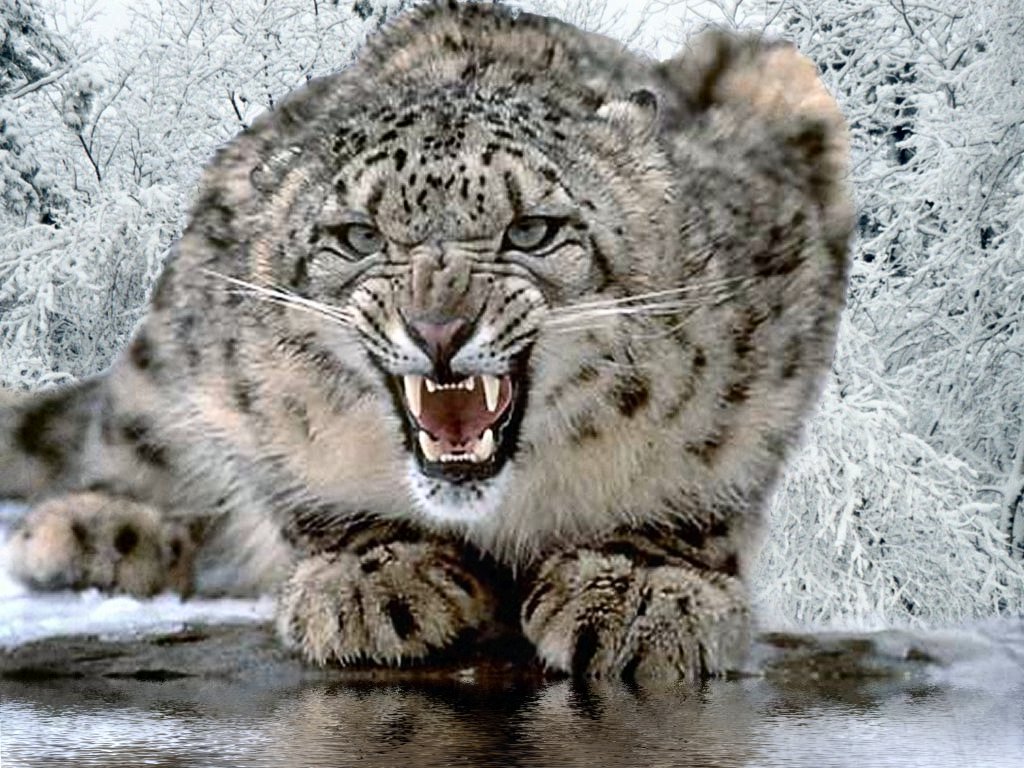
( Uncia Uncia )
Local name: Barfani Chita (Urdu), Ikar (Balti: Baltistan)
Description and Biology:
Although sharing its name with the common leopard, the snow leopard is not believed to be closely related to the Leopard or the other members of the Pantherine group and is classified as the sole member of the genus Uncia uncia. Due to the under-development of the fibro-elastic tissue that forms part of the vocal apparatus the snow leopard cannot give a full, deep roar and this along with differences in skull characteristics help to separate it from its fellow ‘big cats’. In appearance, the snow leopard is strikingly different from the common leopard. Although it has similar rosettes and broken-spot markings, they appear less well defined and are spaced further apart. The fur is long and woolly and helps protect the cat from the extreme cold of its generally mountainous habitat. The general ground coloration of the cat is predominantly grey with brownish/yellow tinges on its flanks and lighter, often white fur on its belly, chest and chin. The head, which sports small ears and a distinctive heavy brow, is rounded and comparatively small for its body size, which can be up to 1.3 meters length and weigh up to around 70kg. The long tail, which can measure as much as 900cm, helps the cat balance as it moves over rugged and often snowy terrain. The powerful limbs of the snow leopard are relatively short for its body size and are supported by large, powerful paws.
Generally crepuscular in its hunting activities, the snow leopards main prey is that of wild sheep such as Bharal (Blue Sheep) and Argali, goats, including Markhor and Ibex. Other prey taken includes Musk Deer, marmots, various species of hare and birds. The cat often uses the natural protection of the terrain to stalk its prey, keeping low below the skyline and pouncing down onto its victim. Commonly the animal is a solitary hunter but may share the task with its mate during its breeding season. It has been know that one animal will stalk the prey while the other lies in wait to make the kill. With larger prey, it is common that the snow leopard will remain close to its kill and return over a period of three to four days to feed. his well built, muscular cat can bring down prey more than two to three times its size, as is the case with the native Yak. However, unlike its distant neighbours the Tiger and Leopard, the snow leopard is generally not aggressive toward man. Where human habitation does come close to the range of the snow leopard, it is common, during the harsh winter months for the cat to take domestic livestock. Some conservation organisations are now working with local inhabitants to help educate in the need for conservation management and to supply financial reparation for the loss of domestic stock. Due to the often-harsh weather conditions that prevail cubs are always born in the spring, with mating taking place some three months earlier in late winter. This ensures that a food source is abundant and less effort is needed to secure a kill. The litter size is usually between 1-4 (typically two) cubs and they are born after a gestation period of approximately 98 days. The cubs weigh between 320-708g at birth -have a daily average weight gain of approximately 48g per day and stay with their mothers until they are over 18 months old (all above information from Big Cats Online).
Habitat and Distribution:
The snow leopard generally inhabits elevations between 2000-4000 meters although it can occasionally be found at lower altitudes to the north of its range and as high as 5500 meters in Himalayan regions. The cat is generally associated with generally rocky terrain such as high valley ridges, rocky outcrops and mountain passes. As summer gives way to winter, the snow leopard will follow its migrating prey down below the tree line to the lowland forests that cover much of its habitat-however the cat is rarely associated with dense forestation.
In summer it is found in alpine pastures upto 5100 m, evelation while in winter it descends to lower altitudes. In the alpine pasture snow the following vegetation characterizes snow leopard habitat:
Primula macrophylla, Sibbaldia cuneata, sedhm recticaule, Cerastium, cerastiodies, Oxytropis immersa
In Pakistan the Snow Leopard is found in the high mountains of the Karakoram and the Hindukush. There are mainly found in Baltistan, Chitral, Gilgit, Upper Swat Valley, the Slopes of Nanga Parbat, Khunjerab National Park and the Chitral Gol National Park. The total population of the snow leopards in Pakistan is 100-200 ( IUCN's Cats Specialist Group).
(Felis Chaus)
Local name: Jangli Billi (Urdu)
Description and Biology:
The jungle cat has long legs and a slender build. The fur is generally sandy brown, reddish or grey, and is unpatterned except for stripes on the legs and occasionally the throat, which are very light in the south of its range and darker in the north. The winter coat is darker and denser than in summer. Melanistic individuals are occasionally reported. Jungle cats have black ear tufts. The tail is relatively short, averaging about 40% of head-body length. Males are markedly larger than females (6.1±1.5 kg [n=20] vs. 4.2±1.1 kg [n=12]: Pocock 1951). In captivity, males are very protective of the cubs, even more so than females, and sexual dimorphism may be linked to this behavior. Family groups -- male, female and cubs - have been seen in the wild.
Jungle cats are frequently observed in the daytime. They feed primarily on rodents, including large rodents. Jungle cats also take hares, birds, reptiles, amphibians, insects, and the young of larger mammals such as wild pig . They are strong swimmers, and will dive to catch fish, or to escape when chased by man or dog. One cat in India, observed hiding in a bush while stalking a group of grey jungle fowl, appeared to make deliberate clockwise movements of its head, rustling leaves and attracting the curiousity of the birds (All above information from Iucn's Cats Specialist Group).
Habitat and Distribution:
The jungle cat, despite its name, is not strongly associated with closed forest, but rather with water and dense vegetative cover, especially reed swamps, marsh, and littoral and riparian environments. It is able to satisfy these requirements in a variety of habitats across a wide geographic area. In sandy and stony desert country (sometimes with only very sparse shrub cover: Roberts 1977), it occurs along riverbeds.
Jungle cats have adapted well to irrigated cultivation, having been observed in many different types of agricultural and forest plantations throughout their range, with sugarcane frequently mentioned in Tropical Asia. Jungle cats are often spotted amidst human settlement (and are frequently reported to take chickens). Jungle cats have adapted well to irrigated cultivation, having been observed in many different types of agricultural and forest plantations in Pakistan. This cat is found through out the riverine tracts of the Indus and the cultivated and irrigated lands of Punjab and Sind. This is the most common wild cat in Pakistan.

(Prionailurus bengalensis) Local name: Chita Billi (Urdu)
Description and Biology:
Broadly speaking the leopard cat is a little larger than a big domestic cat and has a base fur colour that ranges from yellow/brown to grey/brown, found mostly in the north of its range. The underparts, chest and lower head are usually white as is a large spot which is commonly found on the back of the otherwise black ears. In varying intensity, depending on the sub-species the leopard cat is covered with medium to large dark brown to black spots which often coalesce into solid stripes on the top of the back and thin stripe markings on the top and side of the head ( all above information from Big Cats Online).
Rodents form the principal prey. The diet also includes young ungulates, hares, birds, reptiles, insects, eels and fish, as well as occasional carrion. Although often described as primarily nocturnal, Leopard Cats are active in the day time as well (all above information from Iucn's Cats Specialist Group).
The average litter size is 2-3 individuals.
Habitat and Distribution:
The Leopard Cat occurs in a broad spectrum of habitats, from tropical rainforest to temperate broadleaf and, marginally, coniferous forest, as well as shrub forest and successional grasslands. The northern boundaries of its range are limited by snow cover; the leopard cat avoids areas where snow is more than 10 cm deep. It is not found in the cold steppe grasslands, and generally does not occur in arid zones, although there are a few records from relatively dry and treeless areas in Pakistan (Roberts 1977). Leopard cats usually live in proximity to a water source, and can occupy refuge strips of riverine forest in areas. Leopard cats can live close to rural settlements, occasionally raiding poultry.
Subscribe to:
Posts (Atom)